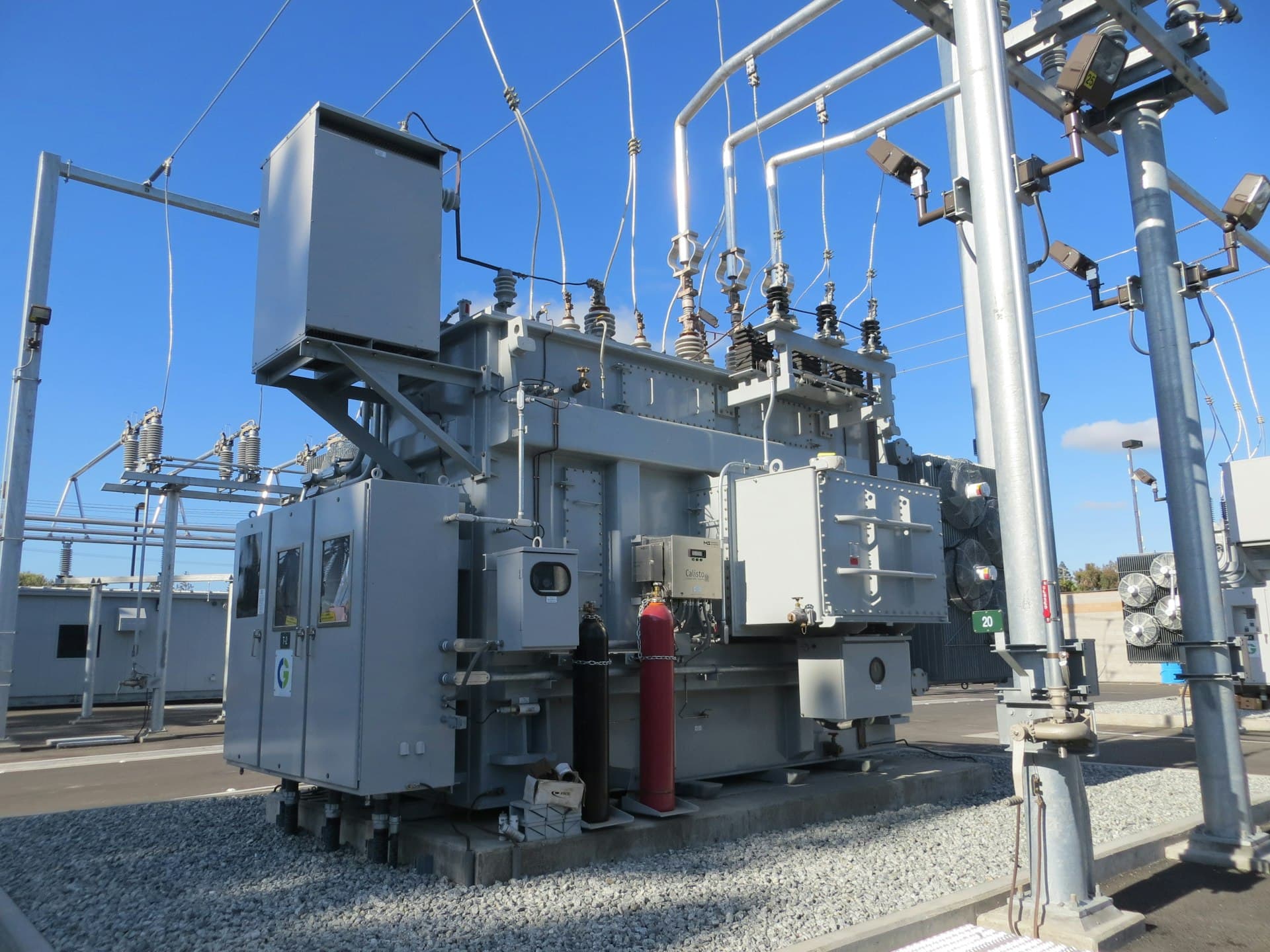
The SCADA Threat Landscape Has Fundamentally Changed
For most of the industrial internet era, the prevailing security guidance for SCADA systems was straightforward: isolate them, minimize connectivity, and hope that obscurity would provide a measure of protection. That guidance was imperfect in 2015. In 2026, it is dangerously inadequate.
Three forces have converged to create the current threat environment. First, a decade of digital transformation, remote operational demands, and industrial IoT connectivity has systematically eroded the isolation that older SCADA deployments relied upon. Second, nation-state actors have invested heavily in developing ICS-specific attack capabilities, tools designed not to exfiltrate data but to disrupt, degrade, and destroy physical processes. Third, ransomware groups have discovered that SCADA disruption creates payment pressure unlike anything achievable by encrypting file servers.
The organizations that are getting this right in 2026 are not the ones with the most isolated SCADA systems. They are the ones who have accepted that connectivity is inevitable, built visibility into their networks, and invested in the detection and response capabilities needed to operate under persistent threat.
Named Threat Actors with SCADA-Specific Capabilities
The most significant development in OT security over the past several years is the emergence of publicly tracked threat groups with demonstrated, purpose-built SCADA attack capabilities. These are not opportunistic hackers stumbling into industrial networks. They are patient, well-resourced teams that have invested years in understanding specific industrial protocols, specific controller platforms, and the specific operational conditions that make attacks achievable.
CHERNOVITE and PIPEDREAM
In April 2022, Dragos and CISA jointly disclosed a threat group known as CHERNOVITE, assessed to be a nation-state actor that had spent years developing PIPEDREAM, the most capable ICS attack framework ever publicly documented. What makes PIPEDREAM particularly unsettling is what it does not need: a single exploited vulnerability. Instead, it abuses the legitimate functionality of industrial protocols, using Modbus, EtherNet/IP, and other standard SCADA communications in ways that most systems have no mechanism to detect or block.
The implication is stark: if CHERNOVITE can communicate with your SCADA system using normal SCADA protocols, your traditional security controls will not stop them. The attack looks, from the outside, like authorized engineering activity.
ELECTRUM and the Industroyer Legacy
ELECTRUM's story is one of the most consequential in the history of OT security. The group, linked to attacks on Ukrainian power infrastructure in 2015 and 2016, developed the Industroyer malware family, tools capable of sending spoofed commands to substation equipment using IEC 104, IEC 101, and IEC 61850, the real protocols that real SCADA systems use to communicate with real field equipment. In December 2016, those spoofed commands successfully cut power to portions of Kyiv. The lights went out because the SCADA system was told, in its own language, to make them go out.
Industroyer2, a modernized variant, was deployed against Ukrainian infrastructure again in 2022. The Industroyer family is not a historical artifact. It is an evolving capability that has been deployed, refined, and reused.
XENOTIME and the Safety System Threat
XENOTIME represents a different category of threat entirely. The group, linked to the 2017 TRITON attack on Safety Instrumented Systems at a Middle Eastern petrochemical facility, was not trying to disrupt operations. It was trying to disable the last layer of protection that stands between a process upset and a physical catastrophe. XENOTIME has since been observed conducting reconnaissance against electric utilities in North America, Europe, and the Asia-Pacific region.
The group's focus on safety systems marks the highest tier of OT threat. Organizations with safety-critical processes should treat XENOTIME's continued activity as a direct signal about their threat environment.
Ransomware Groups with OT Awareness
Beyond nation-state actors, ransomware groups have developed real operational knowledge of industrial environments. Groups including Cl0p, BlackBasta, and LockBit have demonstrated awareness of OT environment characteristics, timing attacks to coincide with peak production periods, targeting operational technology managers in their negotiations, and explicitly threatening to release operational data including process parameters, PLC configurations, and safety interlock settings. This is not generic ransomware that accidentally landed in an OT environment. This is targeted pressure designed by people who understand how industrial operations work.
The trend toward OT-aware ransomware is accelerating, and organizations that have not separated their SCADA networks from corporate IT remain highly exposed.
How the Digital Transformation Has Changed the Attack Surface
The connectivity changes of the past decade have reshaped what a SCADA attack surface looks like:
Cloud-connected historians and analytics platforms now replicate real-time process data to cloud environments for advanced analytics, digital twins, and performance optimization. Each replication pathway is a potential access vector. Cloud platform compromises, credential theft, misconfigured storage, supply chain vulnerabilities in the data pipeline, can all translate to visibility into or access toward SCADA environments.
Remote access for operations and vendor support expanded dramatically during and after 2020. Many organizations stood up VPN and remote desktop access to SCADA environments under operational necessity, with security an afterthought. Remote access infrastructure is consistently among the highest-priority targets for actors seeking OT access.
Cellular-connected RTUs and field devices at unmanned sites are often connected to SCADA masters via cellular networks with minimal authentication. Attacks against cellular infrastructure or against RTUs with web management interfaces exposed on cellular IP addresses represent a growing exposure.
Industrial IoT sensors and edge gateways deployed for condition monitoring and real-time analytics often lack the security rigor of traditional OT equipment and may have direct or indirect paths into SCADA network segments.
Engineering workstations that move between IT and OT environments remain one of the most common pathways for malware introduction into SCADA networks. A laptop used for email and web browsing in the office, then connected to a control network for maintenance, bridges environments that should be kept separate.
The 2026 Defensive Priorities
The current threat environment demands a defensive strategy built around detection, not just prevention. The assumption that adversaries can be kept out of SCADA environments is no longer viable. The goal is to detect them early and respond before they achieve their intended effect.
Visibility as the Foundation
You cannot defend what you cannot see. At Beacon Security, we consistently find that the most fundamental gap in SCADA security programs is insufficient visibility, organizations that cannot answer basic questions like which devices are communicating with their SCADA master, what protocols those communications use, or when the last engineering login occurred. Passive OT monitoring solutions that understand SCADA protocols, Modbus, DNP3, IEC 104, IEC 61850, ICCP, provide the baseline visibility needed to detect anomalies before they become incidents.
For SCADA environments specifically, the highest-value visibility targets are communications between the SCADA master and all RTUs and substations, access to the SCADA server from engineering workstations and operator HMIs, any communication crossing the IT/OT boundary in either direction, and authentication events on SCADA servers and engineering workstations.
Threat-Informed Detection
The publicly available ATT&CK for ICS matrix from MITRE, combined with published technical analyses of PIPEDREAM, Industroyer, and TRITON, provides a roadmap for the specific detection capabilities that matter most for SCADA environments. Rather than building generic monitoring, organizations should map their detection coverage against the specific techniques these threat groups use. Detection of unauthorized logic downloads, control commands from unexpected sources, abnormal protocol traffic targeting SCADA servers, and firmware update attempts outside of authorized maintenance windows should all be explicit detection goals.
Segmentation Hardening
If the network analysis of your SCADA environment reveals that corporate IT systems can communicate directly with SCADA servers, RTUs, or engineering workstations, stop reading and fix that first. It is the single most impactful architectural control available.
After establishing the IT/OT boundary, internal SCADA segmentation matters. Engineering workstations that initiate PLC logic downloads should be in a separate zone from operator HMIs that only read process data. RTUs and field devices should communicate with the SCADA master through defined conduits, not flat networks where lateral movement is unconstrained. Historian and analytics servers should have controlled, one-directional data flow toward IT networks, not bidirectional access.
Vendor and Remote Access Discipline
Every vendor connection to a SCADA environment is a potential entry point. In our assessments at Beacon Security, remote access configuration is one of the most frequently exploitable gaps we find, often because the access was stood up quickly under operational pressure and never hardened afterward.
The discipline required is not complex, but it must be consistently applied. Dedicated remote access infrastructure for SCADA, separate from corporate VPN. Multi-factor authentication on every connection, without exception. Session recording stored independently and tamper-proof. Time-limited, on-demand access that is terminated when the maintenance activity is complete. Vendor-specific credentials, not shared accounts, so that a compromise of one vendor's credentials does not expose all vendor access pathways.
Backup and Recovery for SCADA
The recovery dimension of SCADA security deserves emphasis because it is consistently underprioritized until the moment it is urgently needed. SCADA server configurations, historian databases, and front-end processor configurations should be backed up on a defined schedule and tested for restorability. RTU and PLC configurations in the field should be backed up centrally with version control. Recovery procedures should be documented at a level of detail sufficient for execution by personnel who were not involved in the original configuration. Recovery time objectives should be established for each component and tested through exercises.
Looking Forward
The trajectory of SCADA threats points in one direction: adversaries are becoming more capable, more patient, and more OT-specific. The tools disclosed in 2022 will be refined and expanded. New groups will develop ICS capabilities. The commercial availability of industrial protocol analysis tools makes it easier for lower-capability actors to identify and attempt to exploit SCADA systems.
The organizations that will manage this environment most effectively are those investing now in visibility infrastructure, detection capabilities aligned with known threat actor techniques, and response planning that involves both cybersecurity teams and operations personnel who understand the physical consequences of the systems they protect.
SCADA security in 2026 is not a technology problem with a product solution. It is a discipline problem that requires sustained organizational commitment.
Beacon Security provides SCADA security assessments, threat-informed detection capability development, and segmentation design for energy, oil and gas, water, and manufacturing operators. Contact us to discuss your SCADA security program.