What is NERC CIP?
NERC CIP, the Critical Infrastructure Protection standards issued by the North American Electric Reliability Corporation, is a mandatory and enforceable set of cybersecurity requirements for the entities that operate the North American bulk power system. Unlike voluntary frameworks, NERC CIP is backed by regulatory authority. NERC operates under the oversight of the Federal Energy Regulatory Commission (FERC) in the United States, and violations can result in financial penalties that have historically reached up to one million dollars per violation per day.
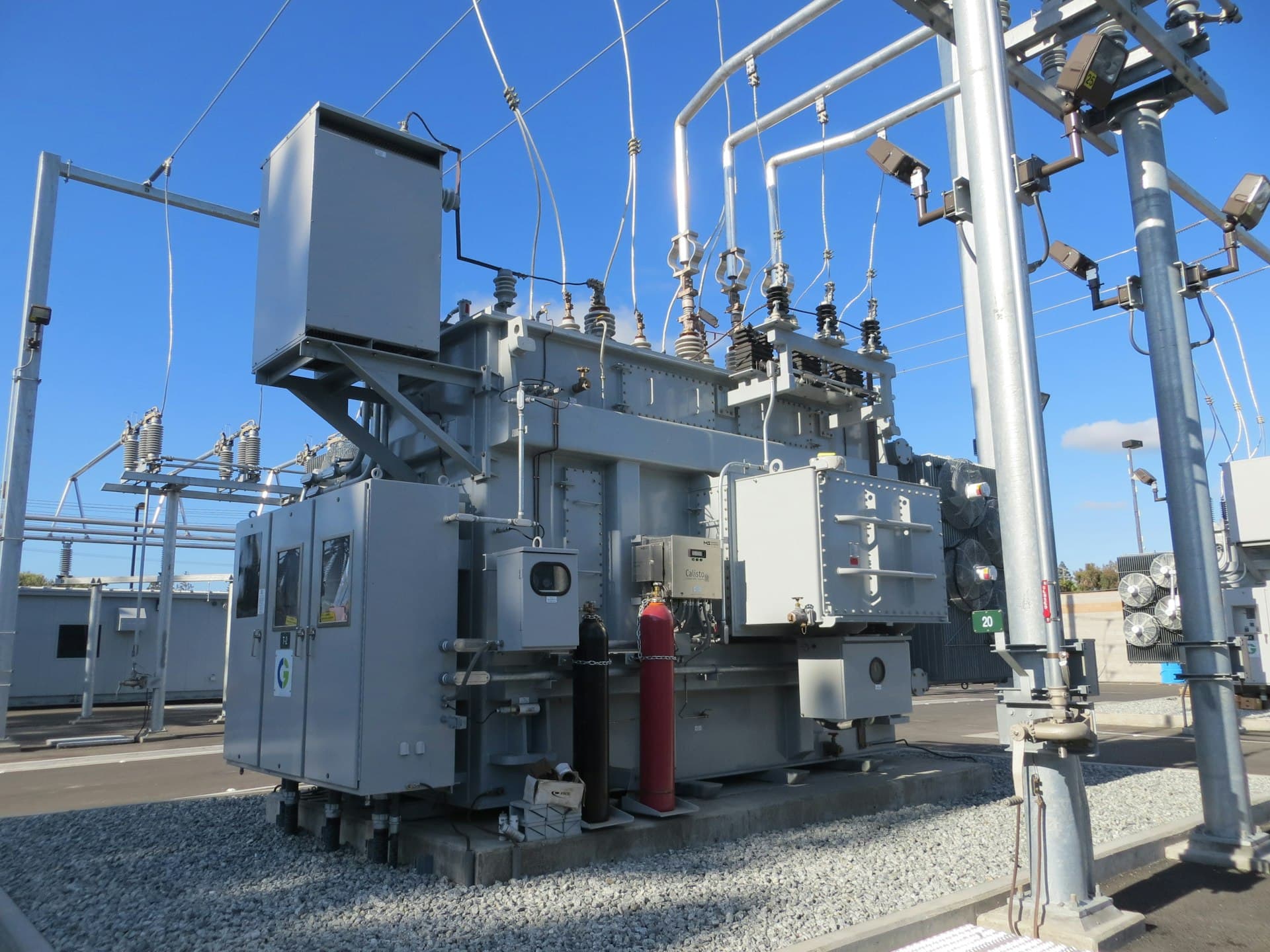
The standards apply to the Bulk Electric System (BES), the high-voltage transmission and generation infrastructure that keeps the grid stable across the continent. Their purpose is to ensure that the cyber assets essential to reliable grid operation are identified, protected, monitored, and recoverable, so that a cyberattack cannot cause instability, uncontrolled separation, or cascading outages.
For a power utility, NERC CIP is not an aspiration to work toward. It is a compliance obligation with audits, evidence requirements, and consequences. Understanding how the standards fit together is the first step toward meeting them efficiently rather than reactively.
BES Cyber System Categorization: The Foundation
Everything in NERC CIP begins with CIP-002, which requires an entity to identify its BES Cyber Systems and rate each one as high, medium, or low impact. This categorization is the single most important step in the entire program, because the impact rating determines the scope of obligations that apply under almost every other standard.
The rating is not a matter of judgment alone. CIP-002 provides bright-line criteria, in Attachment 1, that define which assets fall into which category based on factors such as generation capacity, transmission voltage, and the criticality of the facility to grid reliability. Large control centers and major transmission facilities tend to fall into the high or medium categories, while smaller distributed assets often fall into the low category. The categorization must be reviewed and reaffirmed at least once every fifteen calendar months.
Compliance implication: An error in categorization propagates through the entire program. Under-scoping a high-impact system leaves it under-protected and creates a serious audit finding, while over-scoping a low-impact asset imposes unnecessary cost. Getting CIP-002 right is the foundation of a defensible program.
The CIP Standards Explained
The remaining standards build a comprehensive security program on top of that categorization. Each addresses a distinct discipline.
CIP-003 Security Management Controls requires documented cybersecurity policies and defined senior management accountability, and it sets baseline protections for low-impact systems.
CIP-004 Personnel and Training covers the human element: security awareness, training, personnel risk assessment, and the management of access authorization for individuals who work with BES Cyber Systems.
CIP-005 Electronic Security Perimeter requires that BES Cyber Systems reside within a defined electronic boundary, with controlled and monitored access points, and it governs remote access into that perimeter.
CIP-006 Physical Security Perimeter requires that the same systems be protected by a defined physical boundary with controlled entry, monitoring, and logging of physical access.
CIP-007 System Security Management covers the technical hardening of systems: managing ports and services, patching, malware prevention, security event monitoring, and access control at the system level.
CIP-008 Incident Reporting and Response Planning requires documented incident response plans, testing of those plans, and the reporting of reportable cyber security incidents.
CIP-009 Recovery Plans requires recovery plans for BES Cyber Systems, including backup processes and the testing of recovery capability.
CIP-010 Configuration Change Management and Vulnerability Assessments requires baseline configurations, controlled change management, monitoring for unauthorized change, and periodic vulnerability assessments.
CIP-011 Information Protection governs the handling and protection of BES Cyber System Information, including its secure disposal.
CIP-013 Supply Chain Risk Management requires a documented plan to address cybersecurity risk introduced through vendors, procurement, and the software and hardware supply chain.
CIP-014 Physical Security applies specifically to critical transmission stations and substations, requiring risk assessments and protective measures against physical attacks that could cause instability or cascading failures.
Together with CIP-012, which addresses the security of communications between control centers, these standards form a complete program covering governance, people, electronic and physical perimeters, system hardening, incident response, recovery, change management, information protection, supply chain, and physical security.
Key Concepts: The Electronic and Physical Security Perimeters
Two concepts sit at the heart of NERC CIP and deserve particular attention.
The Electronic Security Perimeter (ESP), defined under CIP-005, is the logical boundary surrounding a set of BES Cyber Systems. All connectivity into the ESP must pass through identified and controlled access points, and any interactive remote access must be brokered through an intermediate system with strong controls. The ESP is the electronic equivalent of a guarded gate around the systems that matter most.
The Physical Security Perimeter (PSP), defined under CIP-006, is the physical boundary around those same systems. Access must be controlled, monitored, and logged, so that only authorized individuals can physically reach the equipment.
Compliance implication: These two perimeters are where auditors focus closely, because they are the primary containment around high and medium impact systems. Weaknesses such as undocumented access points, unmonitored remote access, or gaps in physical access logging are among the most common and most serious findings.
Common Compliance Challenges
From Beacon Security's work with utilities and generation operators, the recurring challenges against NERC CIP include:
- Asset identification gaps, where BES Cyber Systems or their associated assets are missed during categorization, undermining the foundation of the entire program.
- Evidence management burden, where the required controls are in place operationally but the documented, dated evidence needed to demonstrate compliance is incomplete.
- Remote access control weaknesses, particularly around vendor and support access into the Electronic Security Perimeter.
- Change management and configuration drift, where baseline configurations exist but unauthorized or undocumented changes accumulate over time.
- Supply chain program maturity, where CIP-013 obligations are met on paper but not yet embedded into procurement and vendor management practice.
Each of these maps to a specific CIP requirement, and each is manageable with disciplined process and the right supporting tooling.
Approaching NERC CIP Compliance
A sustainable compliance program follows a clear sequence.
- Categorize accurately. Apply the CIP-002 bright-line criteria carefully to identify and rate every BES Cyber System, and document the reasoning. This scopes everything that follows.
- Define your perimeters. Establish and document the Electronic and Physical Security Perimeters, with controlled and monitored access points.
- Implement the technical and procedural controls required by each applicable standard, scaled to the impact rating of the systems involved.
- Build evidence generation into operations. Access reviews, patch records, configuration baselines, change logs, incident response tests, and recovery tests should be produced continuously as part of normal operations, not assembled before an audit.
- Sustain and review. Reaffirm categorization within the required interval, keep documentation current as the environment changes, and treat compliance as an ongoing state rather than a periodic event.
The Bottom Line
NERC CIP can appear daunting because it is broad, detailed, and enforceable. But its logic is coherent: identify the cyber systems essential to grid reliability, rate them by impact, and apply a proportionate set of controls covering governance, access, hardening, response, recovery, and supply chain. Utilities that treat categorization as the foundation, build evidence generation into daily operations, and manage compliance as a continuous discipline find that audits become a confirmation of good practice rather than a source of anxiety.
More importantly, a well-run CIP program does what it was designed to do: it makes the systems that keep the lights on genuinely more resilient against the threats that target them.
Beacon Security helps power utilities and generation operators build and sustain NERC CIP compliance programs, from BES Cyber System categorization through evidence management and audit readiness. Contact us to discuss your compliance objectives.